How to Read Nutrition Labels Without Getting Confused
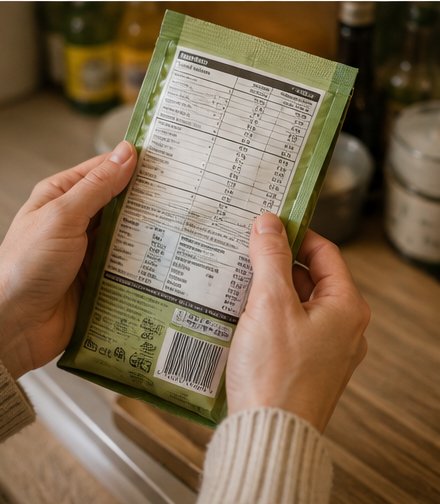
Nutrition labels contain a lot of numbers, and it's easy to either ignore them entirely or get overwhelmed trying to check everything at once. A few key numbers matter more than the rest.
Check the serving size first
All the numbers on a label refer to a specific serving size, which is sometimes much smaller than what's actually eaten in one go — a common way calories and sugar get underestimated by accident.
"Per 100g" is the number for comparing products
Comparing two products by their per-serving figures can be misleading if the serving sizes differ — the per 100g column is the fair way to compare similar products against each other.
The numbers most worth glancing at
- Sugar — particularly in products that don't sound like a dessert but contain a surprising amount.
- Fibre — higher is generally better, and it's often skipped over entirely.
- Protein — useful for judging how filling something is likely to be.
What's less useful to obsess over
Chasing "low fat" specifically often means higher sugar to compensate for lost flavour — the overall picture matters more than any single number in isolation.
The honest takeaway
Labels aren't there to be memorised in detail — a quick glance at serving size, sugar and fibre gives a genuinely useful picture in a few seconds.


Enjoyed this article?
Get simple, practical health tips like this straight to your inbox — no spam, unsubscribe any time.
Curious what a simple, structured morning could do for you? There's a free 1-minute assessment that builds a personalised starting point.
Take the Free 1-Minute Assessment →